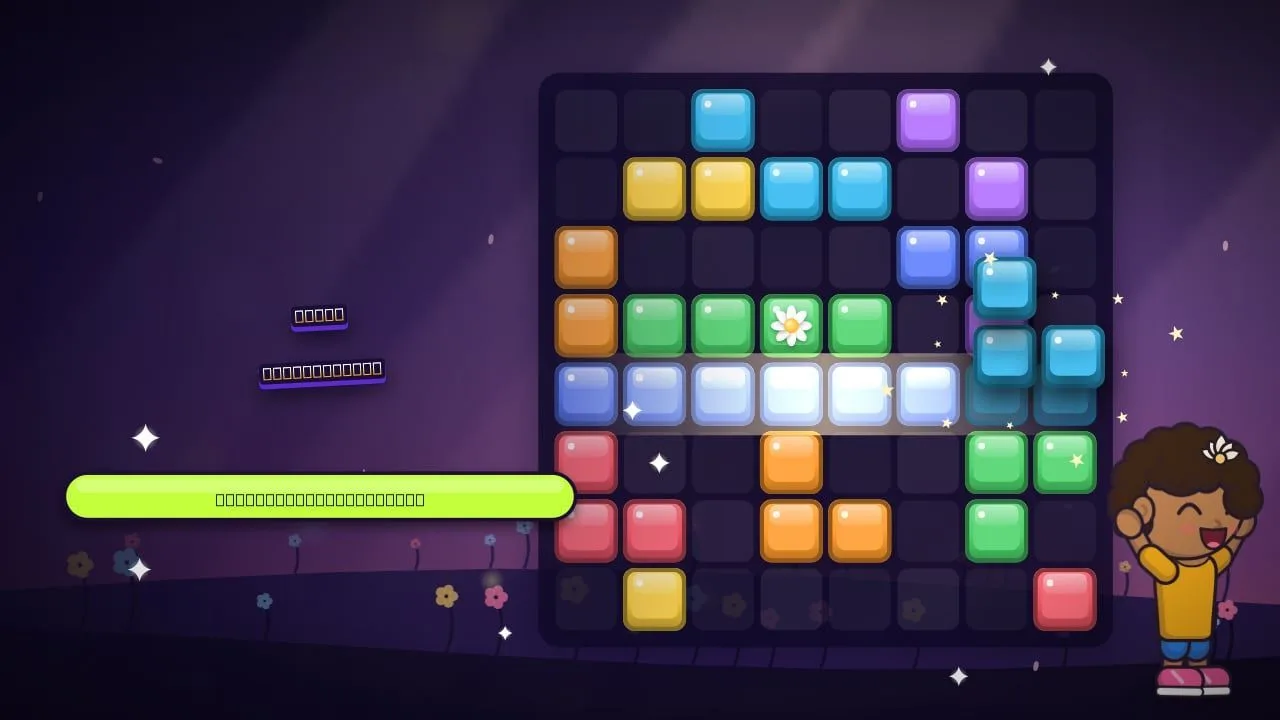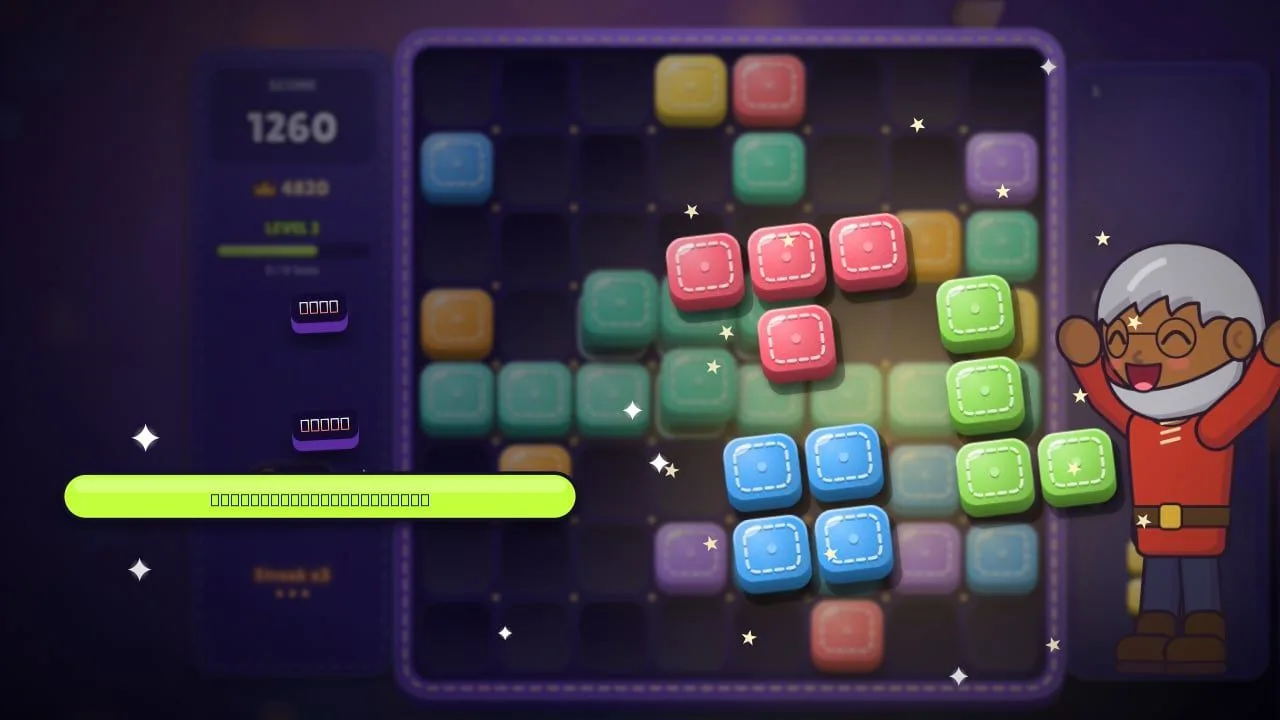
Tips
8x8 Block Puzzle Strategy: How to Score Big and Never Run Out of Space
Block puzzle tips for 8x8 boards: keep the centre open, leave room for the 3x3 square, chain combos and clear several lines at once for big scores.
By GamesYap Team6 min read
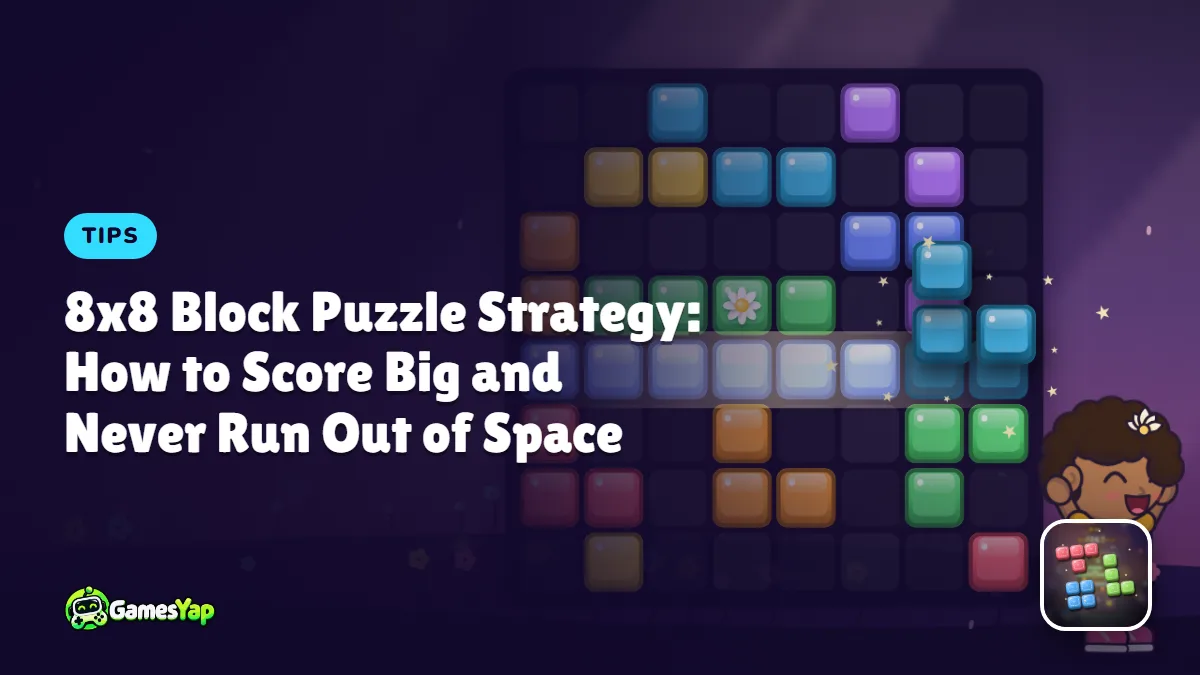
In an 8×8 block puzzle you drag pieces onto the board and clear any full row or column. Pieces cannot be rotated, three new ones arrive after you place the current three, and the game ends when none of them fits. Here is how to stay alive longer and score far more.
There is no timer and nothing falls, so a solid block puzzle strategy matters far more than fast fingers.
1. Keep the centre open
The middle of the board is where large pieces fit. Fill the edges and corners first and leave a big open area in the centre for as long as possible.
Long bars are the exception that proves the rule: a 1×4 or 1×5 line fits neatly along an edge, where it rarely blocks anything. Square and L-shaped pieces belong near the corners, tucked into the angle so they leave the open area intact.
2. Always keep space for the hardest pieces
The 3×3 square and the long 1×5 lines are the pieces that end games. Before every placement, check: after this move, is there still a 3×3 gap and a five-cell line somewhere? If not, choose a different spot.
Scan the board in a fixed order every turn: a 3×3 open square first, then an empty run of five cells in any row or column. It takes seconds and prevents most surprise game overs.
3. Place all three pieces with a plan
Look at all three pieces before placing the first. Sometimes the order matters: placing a small piece first can block the only spot where the big one fits.
A simple routine works well:
- Place the biggest or most awkward piece first, while there is still the most room for it.
- Check whether any piece completes a line. If it does, consider placing it next — clearing a line frees space for the pieces still waiting.
- Place the smallest piece last. Single squares and dominoes fit almost anywhere, so they are the most flexible.
The exception is when a small piece clears a line that makes room for a big one. Then the small piece goes first.
4. Clear several lines at once
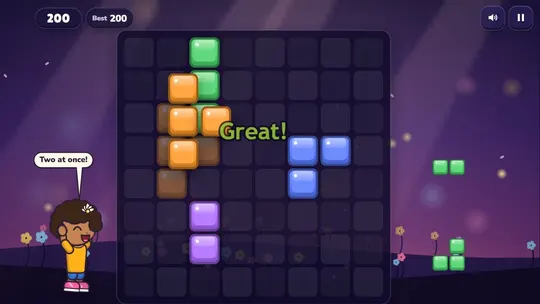
Clearing two, three or four lines with one piece scores far more than clearing them one by one. Build two nearly full rows side by side, then drop the piece that completes both.
A row and a column that cross are even better. Fill a row and a column until each needs only the cell where they meet, and a single small piece clears both. Large L-shapes and 2×3 blocks are ideal "finishing" pieces for two side-by-side rows.
5. Keep the combo alive
Many block puzzles reward clearing on consecutive moves. Once a combo starts, look for a line you can finish with each new piece instead of building something big.
6. Avoid single holes
A one-cell gap surrounded by blocks can only be filled by a single square — a piece you may not see for a while. Fill gaps as soon as you create them.
How scoring rewards multi-line clears
In Block Puzzle Bloom you score 1 point for every cell you place, and each cleared line is worth 20 points plus a bonus that grows quickly when you clear several lines at once. Here is what the line points look like:
| Lines cleared with one piece | Line points | Bonus banner |
|---|---|---|
| 1 | 20 | — |
| 2 | 80 | Great |
| 3 | 180 | Amazing |
| 4 | 320 | Spectacular |
Four lines in one move earn four times the line points of four separate single clears. Clearing again on your very next placement also starts a combo that multiplies your line points, and emptying the whole board adds a 300-point bonus. That is why strong players happily leave two rows almost full for a while.
Common mistakes
- Filling the middle early. It feels efficient, but it splits the board into small areas where big pieces never fit.
- Building one tall stack. Several half-full rows in one area give you nothing to clear and no room to move.
- Ignoring columns. Most beginners only think in rows. Columns clear just as well and often finish more easily.
Two gardens to practise in
Block Puzzle Bloom is our free 8×8 block puzzle in a blooming garden: play endless Classic, a daily challenge with the same pieces for everyone, or the 24-level Garden Path where you free flowers trapped in stone. Pieces are fair — at least one always fits when the board has room.
Glowing previews show which lines a piece is about to clear before you let go, so use them to check your plan. On the Garden Path, the aim changes: clear the row or column holding each flower, and use fewer pieces for more stars. Plan the lines that pass through the flowers first.
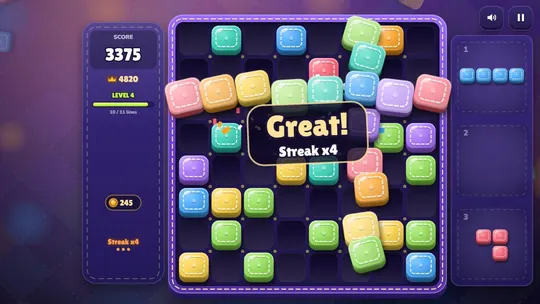
Cube Quilt puts the same idea on a cosy quilt: stitch full rows and columns, clear a 24-quilt journey with goals and stars, and use the tailor's tools when you are stuck. Scissors snip one patch, the seam ripper clears a 3×3 square, and new patches replace your tray. The seam ripper is most useful in a cluttered middle, where clearing a 3×3 area opens several lines at once. On a phone, you can also tap a piece and then tap a spot, which makes precise drops near the edges easier.
For more puzzles that reward the same careful planning, see our list of the best free puzzle games.
FAQ
Can you rotate blocks in an 8x8 block puzzle?
In most 8×8 block puzzles, including Block Puzzle Bloom, pieces cannot be rotated. That is why keeping space for awkward shapes like the 3×3 square and the 1×5 line is so important. Before each move, check that a 3×3 gap and a five-cell run are still open somewhere on the board.
How do you get a high score in block puzzle games?
Clear several lines with a single piece and keep combos going by clearing on consecutive moves. Both multiply your score far more than clearing one line at a time. In Block Puzzle Bloom, four lines at once earn 320 line points, against 80 for four separate single clears without a combo.
Why does my block puzzle game end so quickly?
Usually because the centre of the board filled up or no space was left for the big pieces. Fill the edges first and check that a 3×3 gap remains after each move. Single-cell holes are another common cause, because only a one-block piece can ever fill them.
In what order should I place the three pieces?
Usually place the biggest or most awkward piece first, while there is still the most room, and the smallest piece last, because it fits almost anywhere. The exception is a small piece that completes a line: clearing it first can free space for the big piece.
Is there a free block puzzle game without download?
Yes. Block Puzzle Bloom and Cube Quilt on GamesYap are free and play in the browser on phones, tablets and computers. Block Puzzle Bloom has endless Classic, a daily challenge and the 24-level Garden Path, while Cube Quilt has a 24-quilt journey, a daily quilt and Endless mode.