Guides
What Is a Good Reaction Time for Gaming? The Real Averages, What Your Screen Adds, and How to Get Faster
A good reaction time for gaming is under about 250 ms on an online click test, and the reported median is 273 ms. Here's what slows you down and how to improve.
 By Mahedi Hasan7 min read
A good reaction time for gaming is anything under about 250 milliseconds on an online click test, and under 200 ms is very fast. For comparison, the biggest free test online, Human Benchmark, reports a median of 273 ms and an average of 284 ms across more than 81 million clicks, as Insider Gaming reported. That number includes the lag from each person's mouse, browser and screen, so your raw reflexes are a bit quicker than your score says.
If you want a better number, start with your setup before you start training. Play on a wired mouse or a touchscreen, close other tabs, and use the fastest refresh rate your screen has. Then take the test five times and look at your middle result, not your best one. That's your real starting point.
What the numbers mean
Reaction time is the gap between something changing on screen and you pressing a button. On a simple test, the screen turns green and you click as fast as you can. It sounds like a pure reflex check, but three things are packed into that one number:
- Your brain: seeing the change and deciding to move.
- Your hand: the finger actually pressing down.
- Your hardware: the mouse sending the click, the browser handling it, and the screen showing the change in the first place.
Only the first two are "you." The third can easily add a few dozen milliseconds, and it's the part you can fix today.
Here's a rough way to read a simple click-test score. These are ranges to orient yourself, not official grades:
| Your median score | What it suggests |
|---|---|
| Over 300 ms | Slower than most people taking the test. Check your setup, your sleep, and whether you were distracted. |
| 250–300 ms | Right around the typical online result. |
| 200–250 ms | Quicker than most. Good for fast games. |
| Under 200 ms | Very fast. Few people get here on a normal setup. |
Pro players make headlines with very low scores. Insider Gaming noted one well-known shooter pro scoring 138 ms on stream. Treat single best-ever clicks like that as highlights, though, not as averages.
Your screen is part of your score
A screen draws a fixed number of pictures a second, and nothing you do can show up faster than the next one. The math is simple: 1,000 ms divided by the refresh rate.
| Refresh rate | Time between frames |
|---|---|
| 60 Hz (most phones and office monitors) | about 16.7 ms |
| 120 Hz | about 8.3 ms |
| 144 Hz | about 6.9 ms |
| 240 Hz | about 4.2 ms |
So on a 60 Hz screen, the green light can appear up to almost 17 ms after the test switched it, just from waiting for the next frame. A faster screen shaves that down. Add a wireless mouse, a busy laptop or a TV in movie mode, and your score can be noticeably slower than your reflexes. If you're comparing scores with a friend, compare on the same device.
Reacting vs. predicting
There's a reason sprinters can't go too early. In top-level track, a start less than 0.100 seconds after the gun counts as a false start, on the idea that no one can truly react that fast. The rule became famous in 2022, when a hurdler was disqualified at the World Championships for a 0.099-second start, as this paper on the case describes.
Games work the same way. A lot of what looks like lightning reflexes is really prediction. Take the drag racing in Shift Snap. The start tree's yellow lights count down before green, so a good launch is about timing the countdown, not reacting to green. That's how a launch can show a time far below any human reaction:
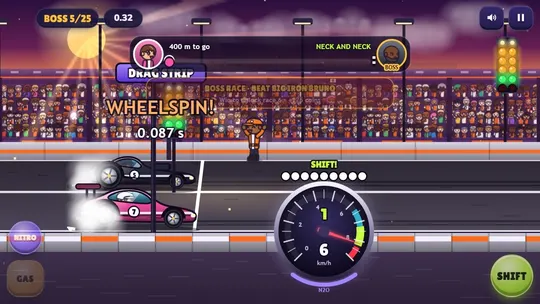
At 0.087 seconds, that's anticipation. Here the needle was too high and the tires spun, so a fast reaction time didn't mean a good start. In real games, reading the pattern beats raw speed almost every time.
How to get faster (the parts that actually work)
Fix the setup first. A wired mouse or a direct touch screen, the game in full screen, and other tabs closed. On a laptop, plug in the charger. Some laptops slow down on battery.
Sleep and timing matter more than drills. Reaction time is one of the first things to slip when you're tired. If your scores are worse in the evening, that's not your imagination.
Warm up. Your first few attempts are usually your slowest. Play a quick game for two or three minutes before a match or a test.
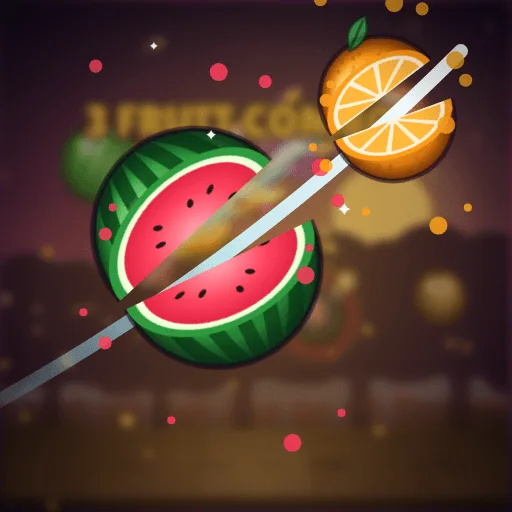
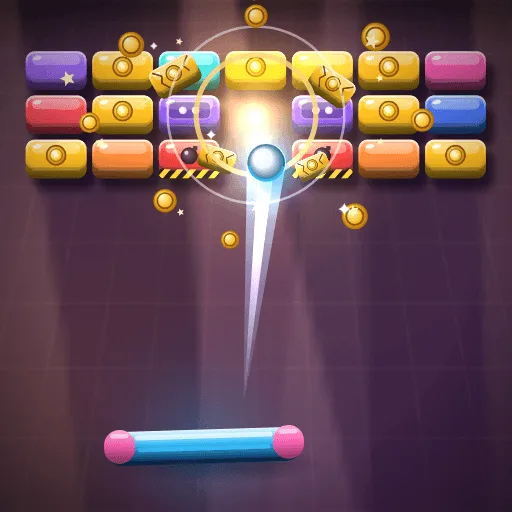
Train prediction, not just reflexes. Fast games reward learning patterns. In Juicy Slash, fruit follows arcs you learn to read. The best trick there is to wait for fruit to bunch up near the top of their arc and slice them all in one swipe, which is a timing skill more than a reflex. More games like it are in our fruit slicing list. In Brick Blitz, watching the angle the ball leaves a brick lets you move the paddle before the ball is close. Our brick breaker tips cover that.
Measure the median, not the best. One lucky 190 ms click means nothing. Take five tries and use the middle one. If it drops over a few weeks, you've improved.
Does reaction time make you better at games?
It helps, but less than people think. In fast shooters and rhythm games, a quicker reaction gives you a small edge in a straight one-on-one moment. Most wins, though, come from being in the right place, aiming where an opponent is going to be, and knowing what comes next. A player with a 260 ms reaction and good positioning beats a 200 ms player who runs into the open.
That's also why age doesn't end anyone's gaming. Reaction time slowly gets worse over the years, but game knowledge keeps growing, and in most games knowledge is the bigger part.
FAQ
What is a good reaction time for gaming?
On an online click test, under about 250 milliseconds is good and under 200 ms is very fast. The largest free test reports a median of 273 ms and an average of 284 ms. Those results include each player's mouse, browser and screen lag, so compare your score on the same device every time and look at your middle result of five tries.
What is the average human reaction time?
On Human Benchmark, the most popular free online test, the median is 273 ms and the average is 284 ms, based on more than 81 million clicks. Lab tests with special equipment usually measure a bit faster, because they remove most of the hardware lag. Your own result also depends on sleep, focus, age and the device you use.
Does my monitor or phone affect my reaction time score?
Yes. A screen can only show a change on its next frame. At 60 Hz, that can add up to about 16.7 ms, and at 144 Hz up to about 6.9 ms. Wireless mice, a busy browser and TV picture modes can add more on top of that. For a fair comparison with friends, take the test on the same device.
Can you improve your reaction time?
A little, mostly by fixing your setup, sleeping well and warming up before you play. Raw reflexes don't change much with drills, but game reactions get much faster with practice because you learn to predict. Fast games where you read arcs and angles, like fruit slicing or brick breakers, build exactly that skill.
Is 150 ms reaction time possible?
On a normal setup, a single click around 150 ms is possible for a fast player with a lucky moment, and some pros post scores near there. A median that low is rare. Remember that in top-level sprinting, any start under 0.100 seconds counts as a false start, because no one is expected to truly react that fast.