

Tips
Platformer Tips for Beginners: How to Jump, Time and Survive Every Level
Platformer tips for beginners: variable jumps, short hops, momentum, stomping enemies, checkpoints and reading traps, with examples from two free games.
By GamesYap Team5 min read
Platformers are one of the oldest and best-loved kinds of video game: run, jump and reach the end of the level. They look simple, yet the difference between a frustrated beginner and a confident player comes down to a handful of skills. These platformer tips explain those skills step by step, using two free browser games as examples — the colourful adventure Leap Quest and the tricky troll platformer Gotcha Steps.
1. Master the variable jump
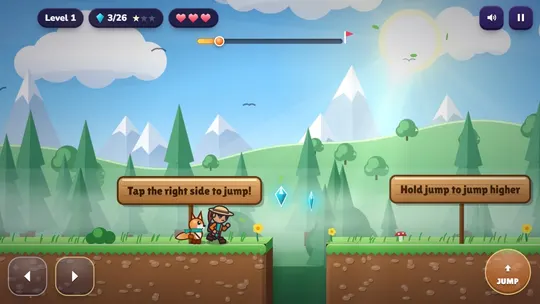
Most modern platformers have a variable jump: the longer you hold the jump button, the higher you go. Tap it for a short hop; hold it for a full jump. Both Leap Quest and Gotcha Steps work this way.
Why does it matter? Because a full jump is not always the right jump. Low ceilings, spikes overhead and small gaps all call for a short, controlled hop. Practise on a safe stretch of ground:
- Tap jump as briefly as you can and watch the height.
- Hold it fully and compare.
- Try three in-between heights.
Within a few minutes your thumb will know the difference — and you will stop bumping your head into spikes.
2. Look before you leap
Beginners tend to run full speed at everything. Good platformer players slow down at new obstacles and look:
- Where will I land? Pick the landing spot before you jump, not during.
- Is anything moving? Wait for moving platforms, lifts or enemies to come to you.
- What is above and below? Gems, shortcuts and hidden dangers are often just off screen.
A one-second pause costs nothing; a fall costs a heart or a restart.
3. Use momentum, but control it
Running before a jump makes it longer. For wide gaps, take a short run-up; for precise landings on small platforms, jump from a standstill or a walk. On slippery surfaces, momentum keeps carrying you — on the ice of Leap Quest's Aurora Peaks, for example, cracked ice breaks a moment after you land, so keep moving and plan your next jump before you touch down.
4. Turn enemies into stepping stones
In many platformers, enemies are not just obstacles — they are springboards. In Leap Quest, jumping on slimes, goblins, skeletons and bats stomps them, and the bounce carries you higher than a normal jump. Stomp several in a row for a combo. Use that extra height to reach platforms that look out of reach.
5. Respect checkpoints
Checkpoints are your best friend. In Leap Quest, touching a checkpoint flag saves your spot and refills your hearts — so even if you are in a hurry, never skip one. Treat each checkpoint as the start of a new mini-level, and focus only on reaching the next.

6. Learn the troll platformer mindset
A troll platformer turns the rules upside down: the level is designed to surprise you. In Gotcha Steps, Pip only has to reach the door, but floors crumble, blocks drop from the ceiling, spikes pop out of nowhere, gravity flips, your controls swap and the door itself grows legs and runs away.
Different rules call for a different approach:
- Expect the obvious path to be a trap. If something looks too easy, pause before you step on it.
- Walk slowly into new rooms. Many traps trigger only when you reach a certain spot.
- Treat every fall as information. Respawning is instant, so each try teaches you a little more about the room.
- Remember the trick. Once you know what a room does, it usually plays fair.
- Watch the door. If it runs, see where it goes before chasing it.
After three falls in a room, a hint bulb appears with a clue — there is no shame in using it.
7. Collect smart, not everything
Gems, coins and stars are tempting, but grabbing every item on the first try often leads to falls. A good approach:
- First run: reach the end safely and learn the level.
- Second run: go back for the gems you saw, now that you know the dangers.
Leap Quest awards up to three stars for gems collected, and many of them are tucked just above or below the main path.
8. Keep sessions short and fun
Platformers can be frustrating when a jump will not work. If you fail the same spot five times in a row, take a short break. Coming back with fresh eyes — and fresh fingers — very often solves it on the first try.
Platformer controls on phones and computers
- On a computer: arrow keys or A and D to run, and Space, Up or W to jump. Keyboards give the most precise timing.
- On a phone: in Leap Quest, hold the left half of the screen to run with the arrows and tap the right half to jump; Gotcha Steps uses on-screen arrows and a big jump button.
Find more jump-and-run games in the platformer category and the adventure games category.
FAQ
What is the most important skill in platformer games?
Jump control is the most important skill. Learn the difference between a short tap and a held jump, choose your landing spot before you leave the ground and slow down near new obstacles. With good jump control, most levels become far easier.
What is a variable jump?
A variable jump means the height of your jump depends on how long you hold the button. A quick tap gives a short hop and holding the button gives a full jump. Leap Quest and Gotcha Steps both use variable jumps.
What is a troll platformer?
A troll platformer is a platform game designed to trick you with surprise traps, such as floors that crumble, hidden spikes, flipped gravity or a door that runs away. Gotcha Steps is a free troll platformer with 24 hand-made trap rooms and instant respawns.
How do I stop falling into pits?
Pick your landing spot before jumping, take a short run-up for wide gaps and avoid holding the run button at the edge. If a gap is narrow, use a short hop rather than a full jump so you do not overshoot onto the next hazard.
Are platformer games good for kids?
Many are. Leap Quest is rated 3+ with colourful worlds, checkpoints and three hearts per level, which makes it forgiving for young players. Gotcha Steps is rated 7+ because its surprise traps are designed to be tricky.

